
Unlocking low carbon heating and cooling solutions
Municipalities across Canada are increasingly exploring Wastewater Energy Transfer (WET) as a pathway to low carbon heating and cooling. By capturing and reusing heat from wastewater, an asset many municipalities already manage, WET systems offer a scalable solution that can support new and current developments while helping communities meet their net-zero emissions goals.
While the potential is significant, municipalities and utilities continue to face several challenges, including technical complexity, economic uncertainty, and limited coordination across sectors.
Canadian Water Network (CWN), with support from the Royal Bank of Canada (RBC), is working to address these barriers. This project is strengthened by the capacity of CWN’s Municipal Water Consortium and supports additional municipalities and utilities across Canada in advancing WET solutions.
Through partnership with the Building Decarbonization Alliance, CWN is providing the knowledge, networks, and sector connections needed to help communities navigate WET implementation responsibly and effectively. A key part of this work is facilitating knowledge exchange between experienced practitioners and municipalities that are beginning to explore WET.
Project Goals
Enhance national understanding and feasibility of WET by examining the barriers facing municipalities as they explore or implement WET and identifying conditions needed for success.
Build and activate a collaborative network to support WET systems implementation by establishing and managing a cross-sector network that promotes collaboration and knowledge sharing.
Empower municipal water leaders by developing tailored approaches, tools, and resources that help them overcome implementation barriers and start WET projects with confidence.


Communities of Practice
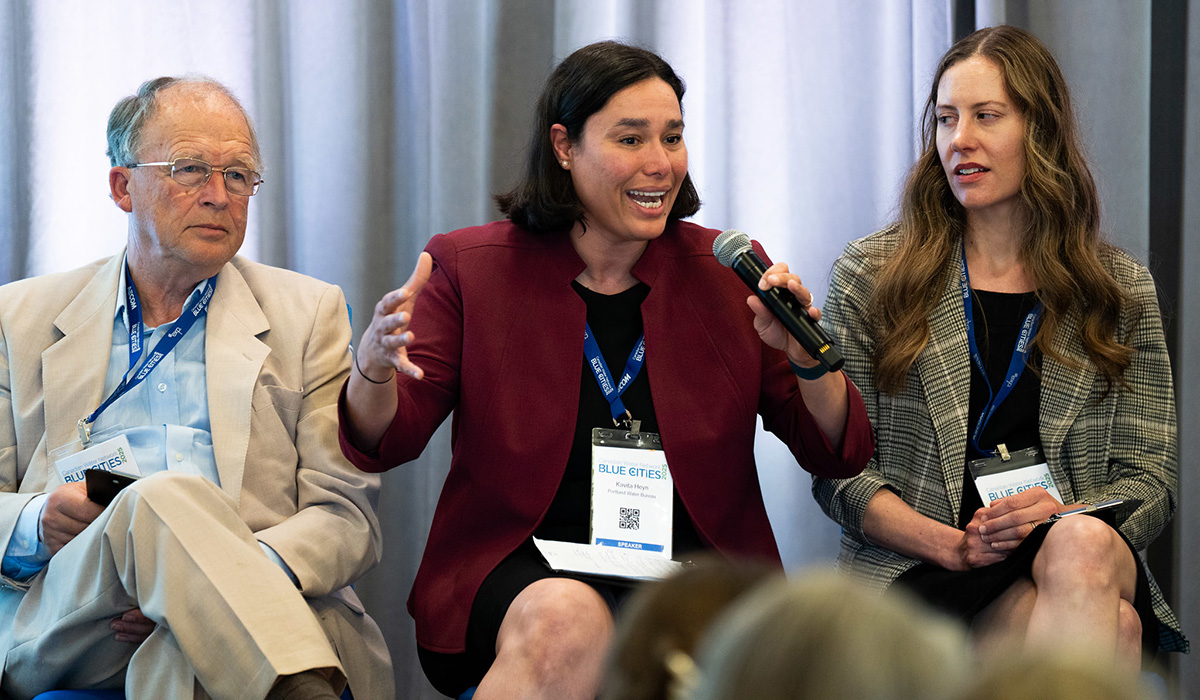
To accelerate learning and adoption, CWN is establishing a Community of Practice focused on WET. This group will bring together municipalities eager to explore WET systems with sector leaders who have practical experience implementing solutions.
Participants will gain access to peer learning, technical insights, applied examples, and shared problem-solving opportunities — helping them build the capacity needed to implement WET in their communities.