
Wastewater-based surveillance is a rapidly evolving area. When we understand and communicate the data effectively, it can benefit communities.
Canadian Water Network (CWN) and the National Collaborating Centre for Infectious Diseases (NCCID) teamed up to help local public health practitioners and provincial health agencies effectively use wastewater-based surveillance (WBS) data to inform public health decisions.
Who was involved?
- Local public health practitioners.
- Provincial and territorial public health agencies.
- Communities and health units across Canada, including Northern Indigenous communities.
What did the program offer?
- Knowledge sharing amongst program participants.
- Insights from national and international experts.
- Publicly available resources and webinars.
Highlights
Knowledge Products
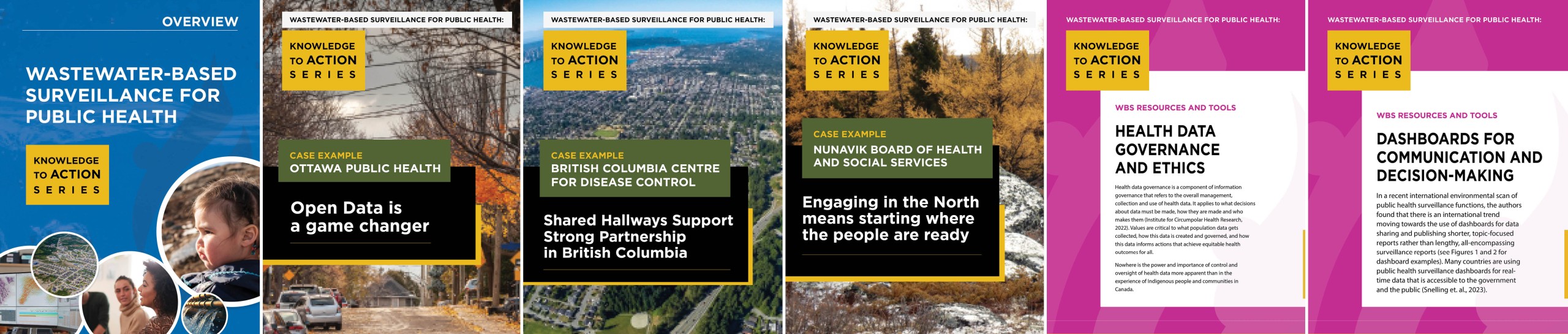
In June 2024 and 2025, CWN and NCCID published a series of resources on WBS. These resources are intended to guide and support the use of WBS to protect health and improve the well-being of people in health regions and communities across Canada.
Webinar

We invited Dr. Amy Kirby from the US Centers for Disease Control and Prevention to share her knowledge about the interpretation and communication of WBS data. Dr. Kirby spoke about the WBS landscape in the U.S. and shared lessons learned during the COVID-19 pandemic.
Webinar

At the end of the inaugural year of the WBS program, staff and participants shared an overview of the program and its achievements. We also provided an overview of WBS programming across Canada.
WBS Summit

CWN and NCCID convened the second annual WBS summit in Winnipeg in the fall of 2024. The event facilitated network-building and knowledge-sharing among program participants and invited experts.
Expert Advisory Group
CWN and NCCID assembled a distinguished group of experts to provide guidance and insights that informed our work. The expert advisory group was made up of leading researchers, innovators, and practitioners in the field of WBS. By sharing their knowledge of cutting-edge research, emerging innovations, and best practices, this group helped ensure that our work remained at the forefront of this rapidly evolving area.
Funding
The 2024-25 program was undertaken with financial support from the Government of Canada through the Public Health Agency of Canada’s (PHAC) National Microbiology Laboratory. The 2023-24 pilot program was undertaken with financial support from the Government of Canada through PHAC’s National Microbiology Laboratory and Indigenous Services Canada.