Award acceptance speech — Susan Ancel
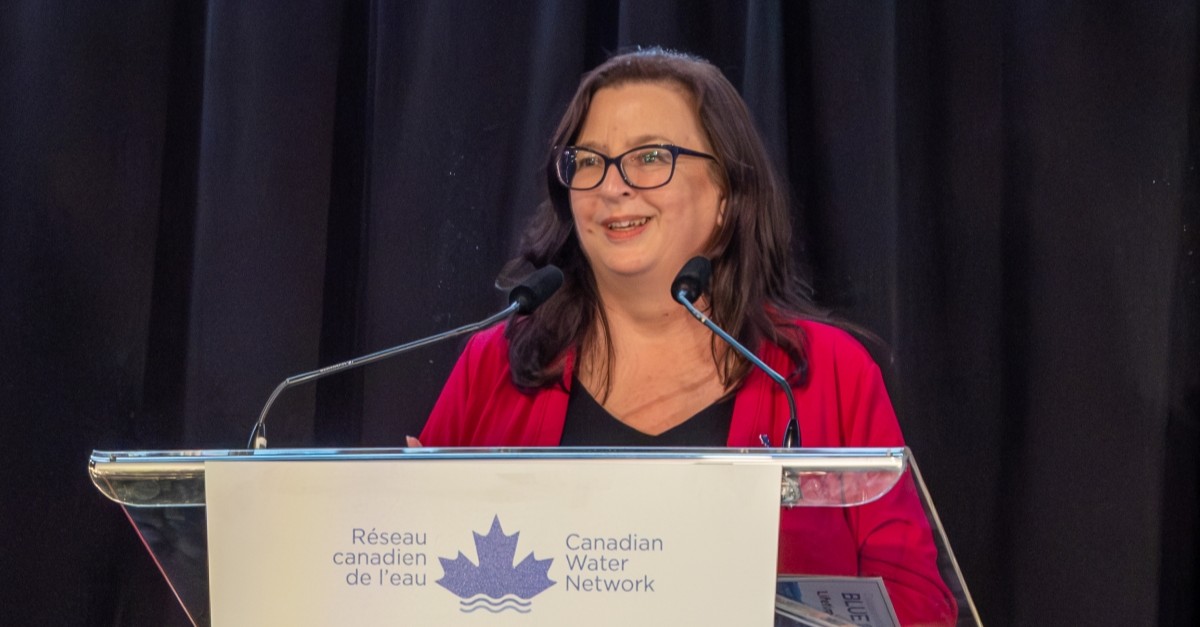
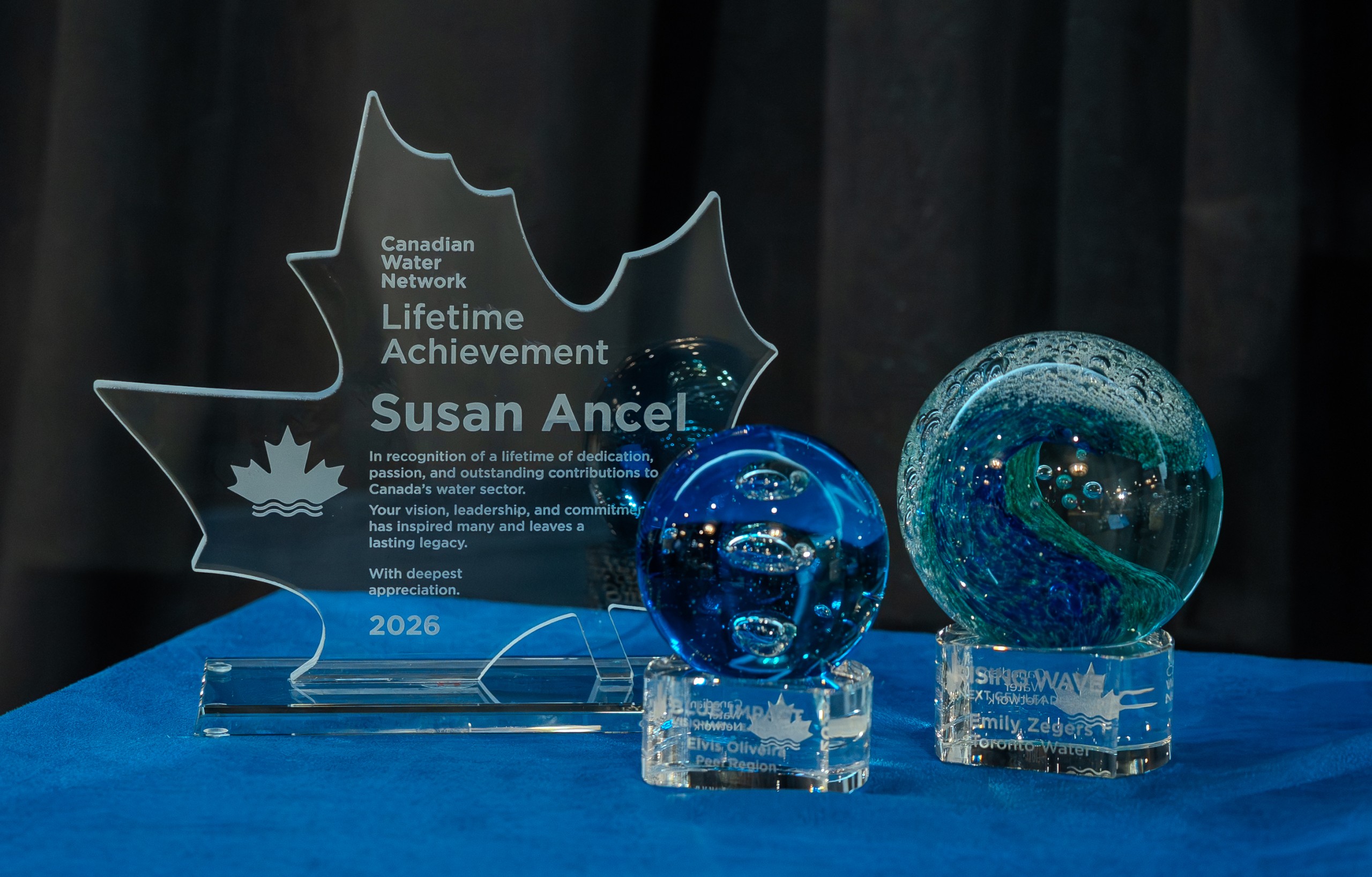
During Blue Cities 2026, Susan Ancel of EPCOR was presented with the Canadian Water Network’s (CWN) Lifetime Achievement Award. We’re pleased to share her acceptance speech below.
Thanks, Nicola and thanks to everyone here – I am very honoured to receive this award in recognition of my service to the Canadian water sector.
I look back on my almost 40 years in the industry and how much has changed from a technological and complexity of our utility operations perspective, but has not changed from a dedication to service of our community perspective.
It has often been said that the water utility is the hidden component of the public health sector in our community, and I think this is a key characteristic that instills the cooperative approach we all exhibit to share information and work together on complex societal problems.
I started my career as one of the six women engineers graduating from mechanical engineering at the University of Alberta, and entering the work force was one of the first three women engineers ever hired by the consulting firm where I started my career. I look around the room now and at EPCOR, where I spent the bulk of my career, and it is great to see how the diversity of engineering has progressed from those early days. A large part of my volunteerism continues to support new graduates entering the work force and breaking down barriers that face individuals moving into non-traditional roles.
My career in the water industry was also partially dictated by external factors. I started designing HVAC systems, a more traditional mechanical engineering path, but was impacted when the entire mechanical department at the consulting firm quit to join another firm. I was too new and had potentially been foisted into their clique, and was not included in their plans. Fortunately, the company president saw value in me and shifted me into the municipal department while they figured out how to rebuild their mechanical division.
My shift into the municipal department saw me self-teaching myself how to use the water distribution hydraulic models, at the time with no graphical interfaces, and designing water systems for many subdivisions in Edmonton and water projects for communities in western and northern Canada including Town of Edson and City of Whitehorse. The Whitehorse project in particular was an interesting innovation through the development of a heated recirculating water distribution system to reduce the need for water bleeders in each home in the winter months and reduce the per capita water consumption from 1,100 to less than 300 litres per person per day. My early foray into water conservation impacts on infrastructure sizing.
During that time, I also had the opportunity to work with the City of Edmonton on the development of the first neighborhood-focused renewal programs for water and wastewater infrastructure leveraging significant grant funding from the federal and provincial governments and utilizing GIS tools to consider the capacity, condition, and social impacts of these renewal initiatives. Recognizing that the impact of a functioning water and wastewater system had on the social fabric of the community. It was shortly after that project that an opening came up in the planning group of the City of Edmonton Water Branch in 1992, and I joined the subdivision planning group. After a year, I transitioned to lead the water master planning team.
In 1996, I was doubly fortunate to be part of the 1,200 employees that made the transition of the Water Branch and Power utility into the Municipal Corporation that became known as EPCOR and our new mandate to expand and grow beyond our city-constrained boundaries.
For me, it resulted in a work environment that provided me with the best of both my worlds of experience in consulting and being part of a City department. I was able to still be engaged in solving big multiyear community-scale initiatives but also work in multiple communities and with industrial partners solving their unique challenges and leveraging the learnings from each new project to further our approaches in Edmonton. I look at EPCOR now with over 3,800 employees and operating in four provinces and three states, and all the opportunities it provides for our team and continue to be amazed at where we have evolved in just 30 years. For myself, I can stay engaged with EPCOR on a part-time basis since I officially retired because of the diversity of opportunities in our organization.
Nicola mentioned some of my accomplishments in her introduction, and I want to reiterate and expand on some of these.
In 1993, I was asked to explore the potential of adapting the Integrated Resource planning techniques being used in the electrical industry to see if they could be applied to the water utility and optimize our timing for growth and resiliency expansions on our water system. These approaches, now more commonly known as adaptive planning, were new and very different from the historical master planning processes used in the water utility sector. The approach opened up considerations such as working with upstream landowners in the watershed as the first stage of treatment and working closely with your customer base to reduce total and peak water usage to delay timing for major core infrastructure upgrades. The focus on reliability led to projects that supported both growth and increased system resiliency. The new approach to planning was exciting for me as it tugged on my desired to be an active participant in how my community grew. Through this work we brought Edmonton’s residential per capital usage down to less than 160 Liters per person per day from the industry standard, and what was seen as a big accomplishment in Whitehorse, of 300 Liters per person per day.
In 2015, after many years focused solely on our potable water initiatives, I was asked to be part of the team building the business case to transition the City of Edmonton Drainage branch into the municipal corporation model as part of EPCOR. We identified numerous opportunities to improve efficiency and position our Edmonton operations to transition to the industry recommended One Water model in 2019. Shortly after the transition was completed in late 2017, I was asked to adapt the IRP techniques developed for our water utility into the stormwater utility considering the increasing climate pressures being seen in this area. This is the project myself and EPCOR were recognized for a couple of Clean 50 awards in 2021.
I was very fortunate during this time to be on the CWN Board and an active member of CWN’s Municipal Consortium leadership group and was able to leverage these contacts and participate in a series of in-depth discussions with the insurance sector here at these forums to identify innovative ways to adapt our utility. Many in this room were part of these discussions, and I happily leveraged (fancy word for stole) your ideas while developing the strategy for Edmonton. This also led to an opportunity for me to participate in the national adaptation strategy for Canada, and I look forward to seeing how this initiative continues to play out in the coming years.
I have mentioned volunteerism a number of times in my speech, and I would like to close on this point. Often people ask me how do I find the time and why do I do this so freely and collaborate with others. I say in response that I am not sure I could have been as successful in my career without the volunteering activities and the relationships I developed with my peers tackling similar big societal problems as we delivered on our public health mandates in our communities.
I strongly recommend that each and every one of you look at how you are contributing to your community and where your expertise could make someone else’s problems easier to solve. You can gain the benefit of their knowledge in helping you solve your focused initiatives. Water utilities and water professionals can no longer hide in the background being “brilliantly invisible” to quote Erin Mahoney from a CLG meeting a few years ago. In many cases, we hold information about how our communities are evolving and can support the other sectors that are addressing affordability, healthy business climate, climate adaptation and mitigation, and resiliency in the face of aging infrastructure.
Thanks again for this recognition, it is greatly appreciated. I hope to continue to be connected to many of you in the water sector in the years to come.