Microplastics and land application of biosolids: Insights from Southern Ontario studies
Canadian Water Network (CWN) + Ontario Biosolids Council — October 2026
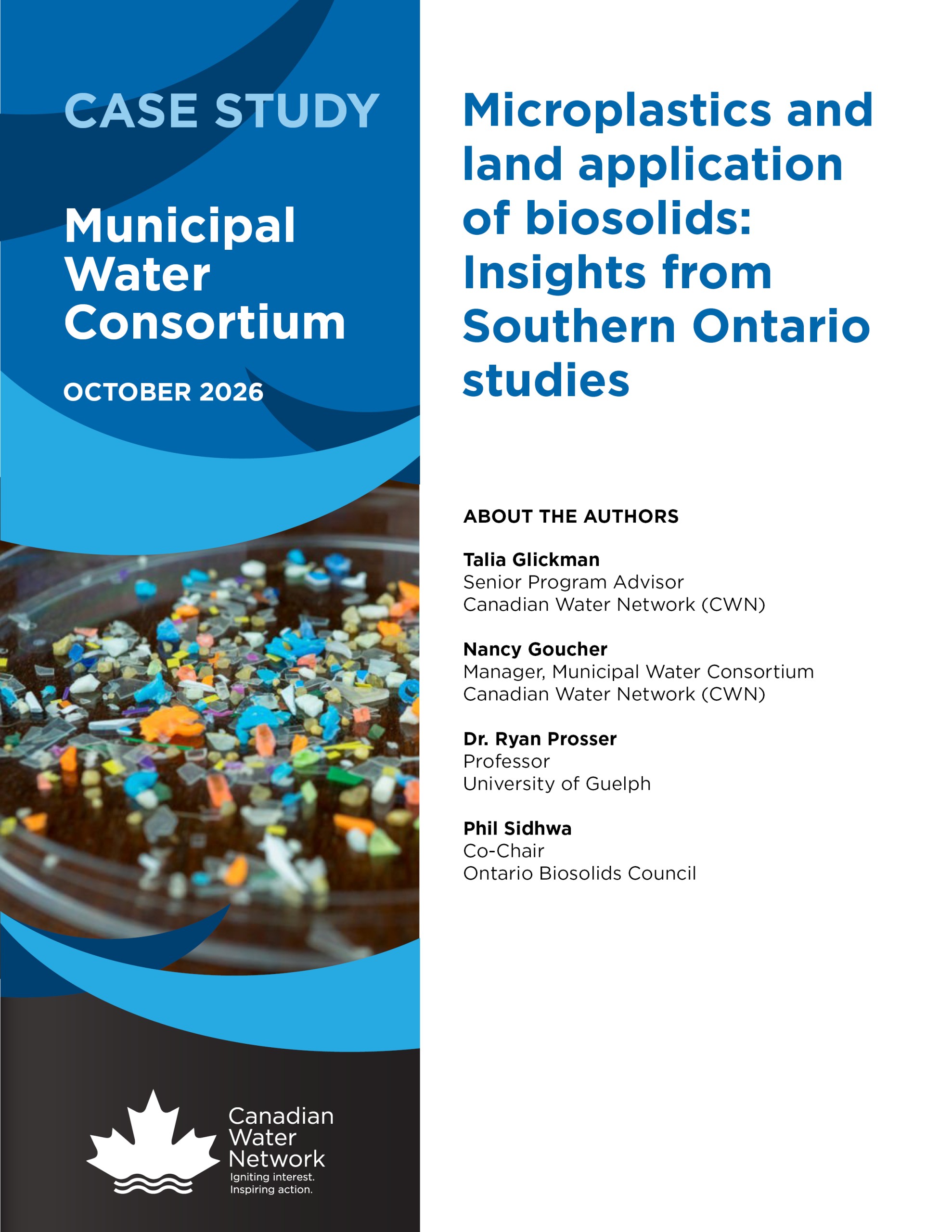
This brief synthesizes key findings from a series of studies led by Dr. Ryan Prosser at the University of Guelph on microplastics in Ontario biosolids, agricultural soils, and earthworms. Although it is not a comprehensive review of all available research on this topic, it incorporates relevant supporting literature to contextualize these findings and assess their implications for municipal biosolids management in Ontario.
Key insights
- Microplastics are widespread in agricultural soils. They enter the environment through multiple pathways, including atmospheric deposition, road dust, synthetic textiles, plastic-coated fertilizers, and other human activities. As a result, microplastics are commonly found in soils even in the absence of biosolids application.
- Biosolids are one of several sources of microplastics in soil. Prosser’s research detected microplastics in all agricultural soils studied, including fields with no history of biosolids application. While fields receiving biosolids generally had higher microplastic concentrations, biosolids were not the sole determinant of microplastic levels in soil.
- Biosolids application was associated with higher microplastic concentrations, but the magnitude of the increase varied. This suggests that biosolids contribute to, but do not exclusively determine, microplastic levels in agricultural soils.
- No adverse effects on earthworms were observed at current microplastic concentrations. Prosser’s research found no evidence that current microplastic concentrations in Ontario agricultural soils harm earthworm survival, reproduction, or behaviour, suggesting current soil concentrations are not known to impair this important soil organism.
- Important questions remain about long-term environmental impacts. Researchers continue to investigate how microplastics accumulate and move through soils, whether concentrations are changing over time, and what long-term effects they may have on soil health and ecosystems.